

| Case Report Online Published: 18 Oct 2024 | ||||||||||||
Case Rep Ser Med. 2024; 1(1): 22-27 Pediatric Post Pubertal Undescended Testicular Torsion William Cobb, Jonathan Xavier, Vinay Pai, Pablo Gomez.
| ||||||||||||



Introduction
Cryptorchidism refers to a testicle outside the scrotum and is often found along the path of normal testicular descent. [1] Testicular torsion occurs when the spermatic cord is twisted upon itself leading to acute decreased blood flow of the testicle and the annual incidence of testicular torsion is 3.8 per 100,000 in the pediatric population. [2,3] While cryptorchidism is relatively common and seen in approximately 3%–5% of newborn males, testicular torsion in the setting of cryptorchidism is a rare occurrence [4,5]. Testicular torsion is a surgical emergency. The first case of testicular torsion with cryptorchidism was described by Delasiauve in 1840. [6] Since first described, the literature on testicular torsion associated with cryptorchidism in the pediatric population is limited to case reports, case series, and small retrospective reviews. Here, we present the case of a testicular torsion of an undescended testicle within the inguinal canal of a postpubertal male who presented with 3 days of worsening right inguinal pain after heavy lifting treated with emergent inguinal exploration, right inguinal orchiectomy, scrotal exploration, and left testicular fixation.
Received : August 09,2024Revised : Month Date, YearAccepted : August 26, 2024Published : October 18, 2024Start Page number : 22Vol/issue : 1(1)PRESS SHIFT + F5 TO REFRESH
Case description
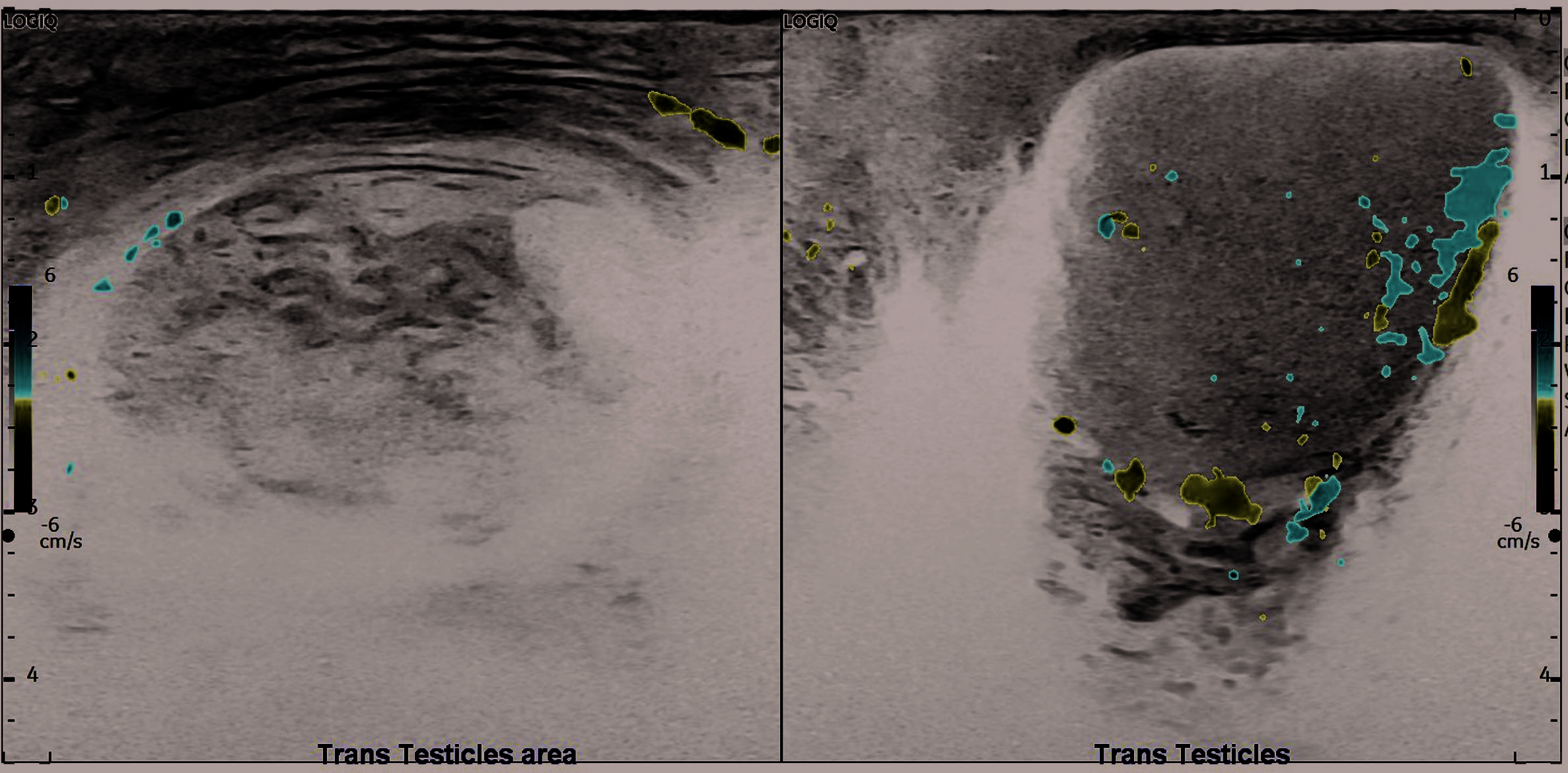
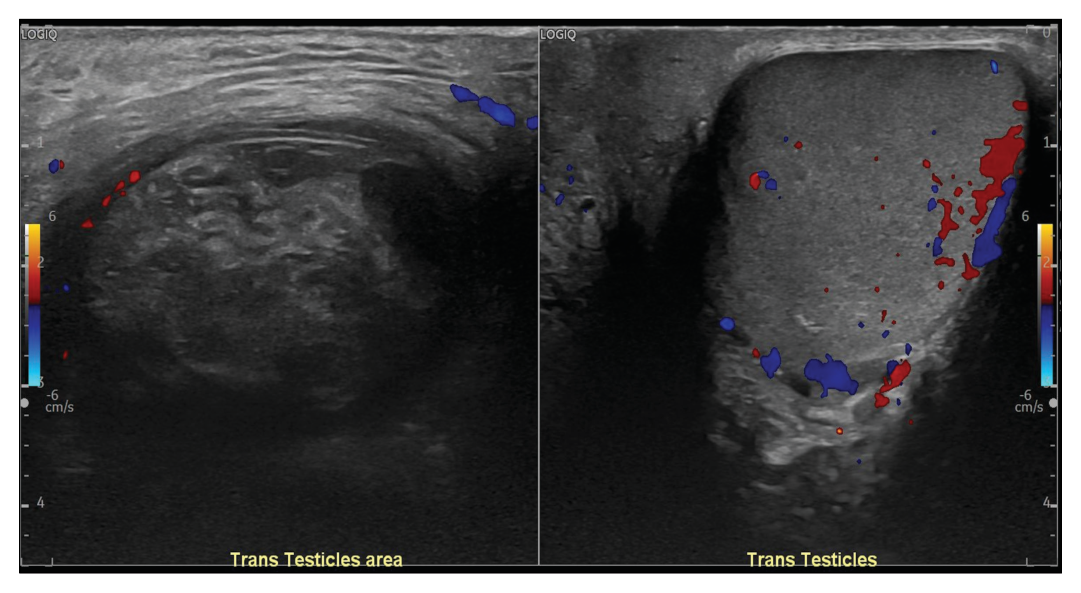
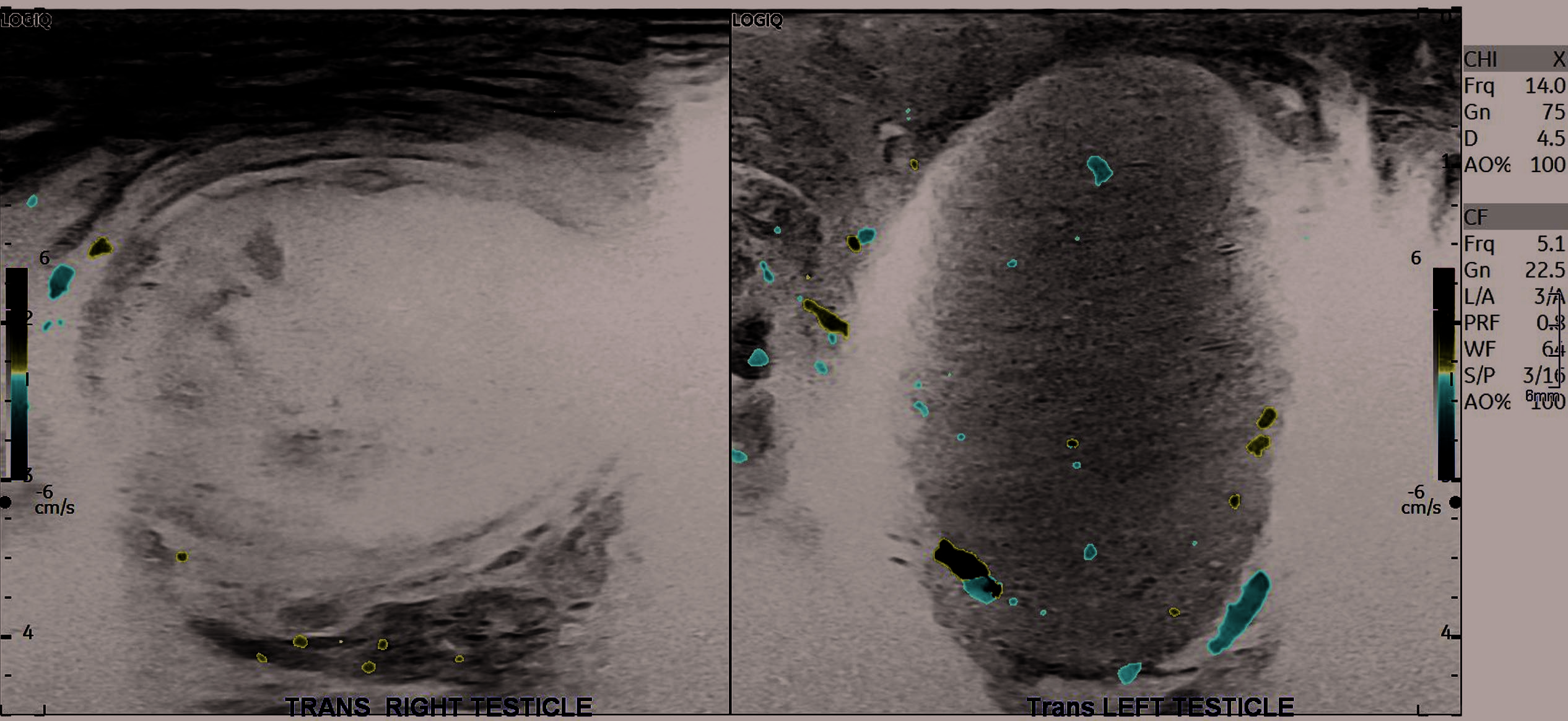
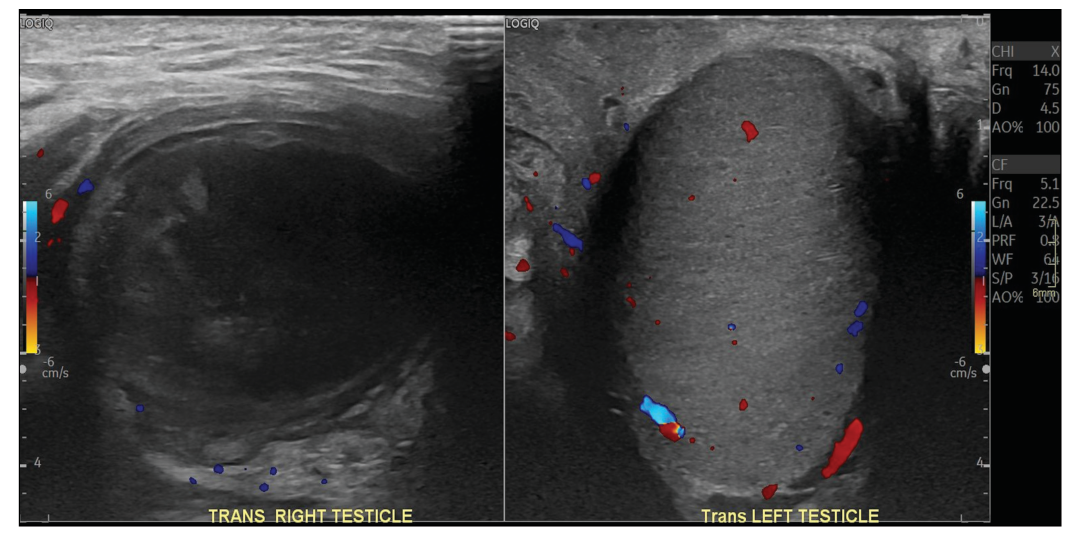
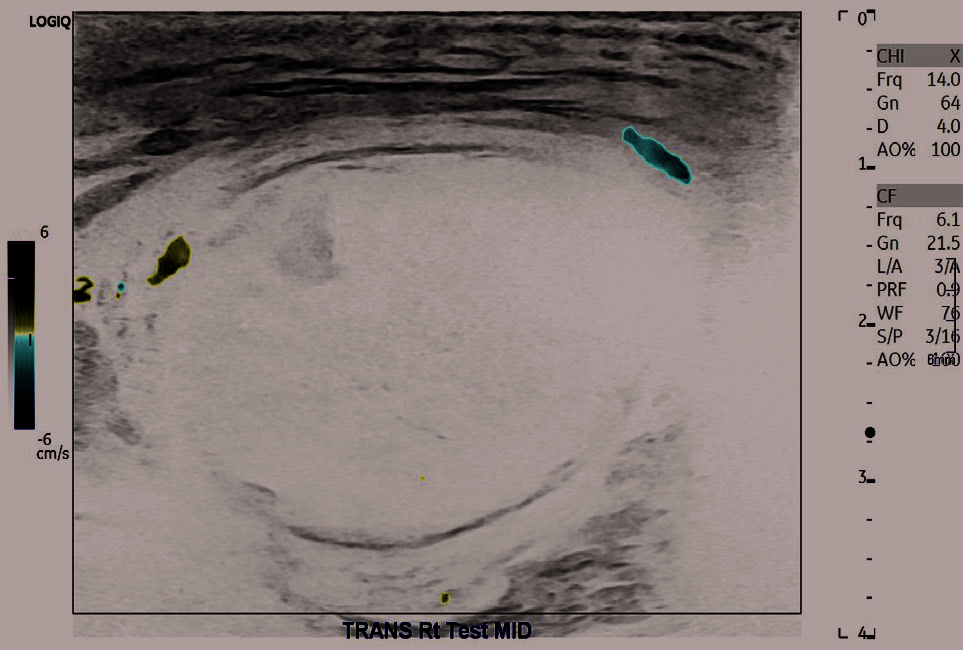
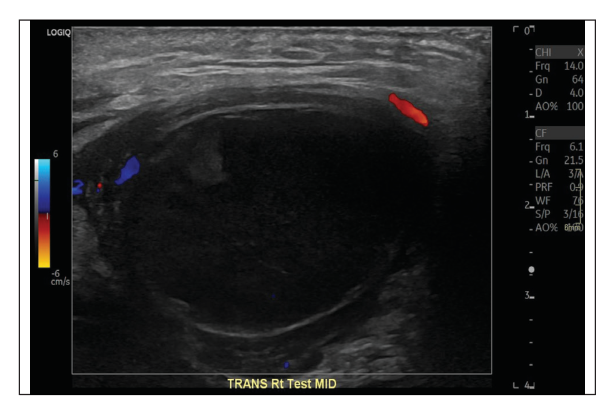
Our case is of a 13-yearold male with a past medical history of autism spectrum disorder with limited verbal abilities who presented to our institution with 3 days of worsening right inguinal pain after heavy lifting associated with bulging in the right inguinal canal, bulge growth, and developing skin changes overlying the inguinal bulge. The patient denied nausea, vomiting, abdominal pain or distension, diarrhea, testicular swelling, or testicular pain. The patient’s laboratory results were within normal limits. On the initial abdominal physical examination, the abdomen was soft with no distension, tenderness, guarding, rebound, rigidity, or peritonitis. The inguinal and genitourinary examination was pertinent for right inguinal swelling and tenderness with overlying skin erythema and no scrotal swelling or tenderness but only a left testicle palpable in the scrotum. With concerns for an incarcerated right inguinal hernia or possible testicular torsion, additional ultrasound (US) imaging and consultation with Urology were obtained. Ultrasonography (US) imaging results revealed torsion of the right testicle with diffuse abnormally low echotexture, trace hydrocele, overlying scrotal wall thickening with edema, an enlarged right epididymis with heterogenous echotexture, lack of vascularity, and epididymal head replacement by multiple simple appearing cysts (Figs. 1–3). The patient underwent emergent inguinal exploration, right inguinal orchiectomy, scrotal exploration, and left testicular fixation. Intraoperatively, immediate visualization of a necrotic right testicle with a 720-degree torsion to the spermatic cord was noted, the testicle was not salvageable. An orchiectomy was performed. The decision was made to perform a contralateral orchiopexy. Pathology was consistent with a diffusely hemorrhagic and infarcted testicle consistent with testicular torsion, negative for malignancy.
Methods
A literature review was conducted using PubMed, Ovid, Clinical Key, Cochrane Library, Web of Science, and UpToDate; results were not limited by publication date. We reviewed the resulting literature to determine the incidence and prior reported cases, presentation, imaging findings, and management of previous literature. Reviewed literature included retrospective reviews, literature review articles, multiple case series, and multiple case reports.
Discussion
Testicular torsion occurs when the spermatic cord is twisted upon itself leading to acute decreased blood flow of the testicle [2]. The annual incidence
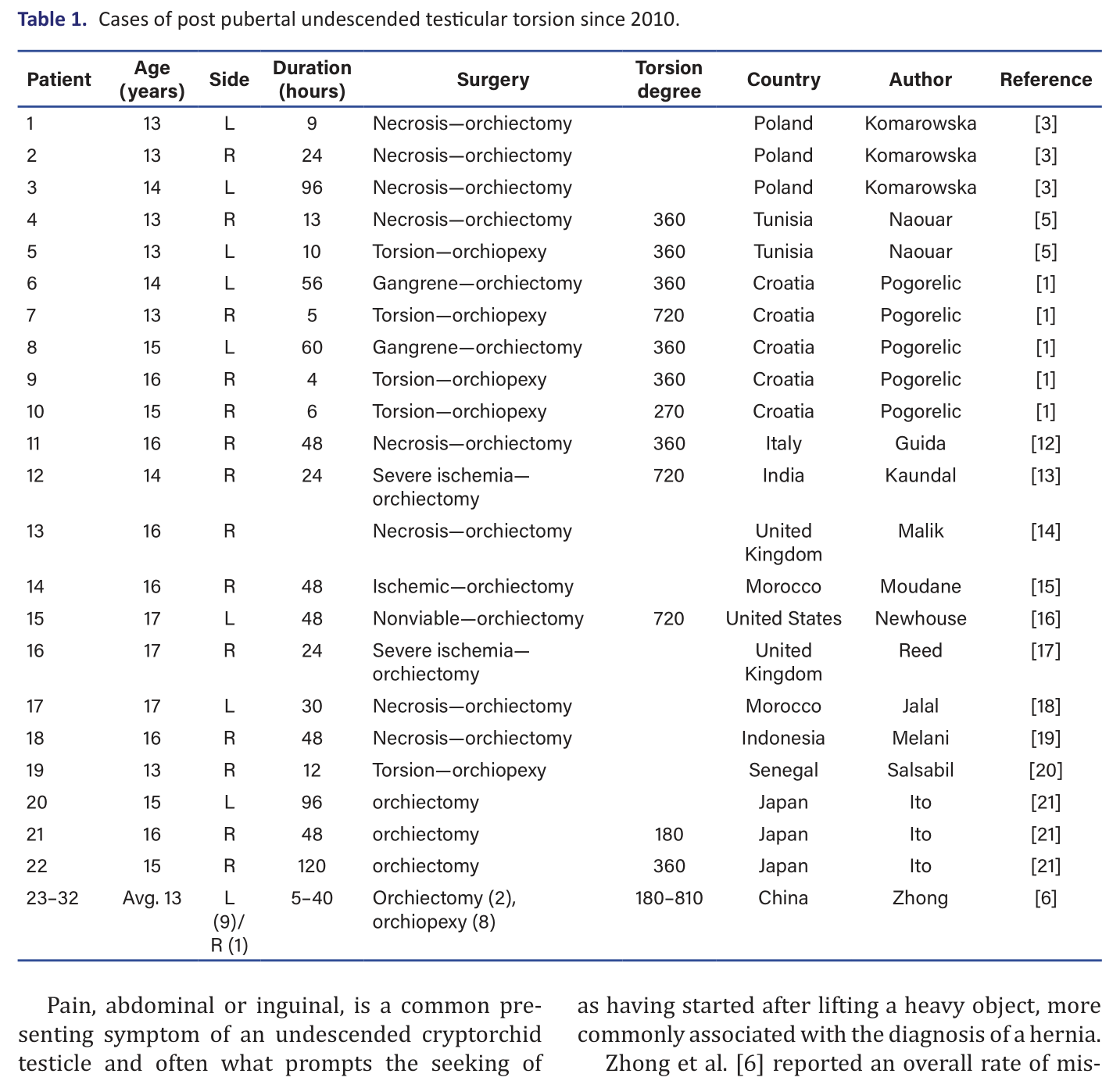
of testicular torsion is 3.8 per 100,000 pediatric patients and there are two peaks in the incidence which occur during the first year of life and between 12 and 18 years of life [3,7,8]. Cryptorchidism refers to a testicle not located within the scrotum, often found along the path of testicular descent from the initial location in the abdomen down towards the scrotum [1]. While cryptorchidism is relatively common and seen in approximately 3%–5% of newborn males, testicular torsion in the setting of cryptorchidism is a rare occurrence [4,5]. The literature on testicular torsion associated with cryptorchidism is limited to case reports, case series, and small retrospective reviews. The literature on this phenomenon is even more limited for the postpubertal pediatric population.Since first being described there are a limited number of published cases of testicular torsion in cryptorchidism in the postpubertal pediatric population. Since 2010, our review of the literature found only 32 published cases (Table 1). Due to its uncommon nature and the similarity of presenting symptoms with other common conditions, the rate of missed torsion and delayed diagnosis can be high [9]. Here, we present the case of a testicular torsion of an undescended testicle within the inguinal canal of a postpubertal male that highlights the importance of increasing awareness of the condition, physical examination, and imaging. The incidence of undescended testes in fullterm infants is 3.5%, the incidence of undescended testes drops to about 1% at 1 year of age, and further drops to about 0.8% in adults [2]. An undescended testicle when identified in an infant, is intervened on to avoid complications such as increased risk of testicular germ cell cancers, subfertility, and torsion [10]. The pathogenesis of cryptorchidism is unclear and may be related to the following factors: abnormal contraction and spasm of the cremaster muscle seen with neuromuscular disease or cerebral palsy, association with altered testicular weight as seen in combination with a testicular tumor, or loss of normal anatomical fixation [11].
Pain, abdominal or inguinal, is a common presenting symptom of an undescended cryptorchid testicle and often what prompts the seeking of medical attention [22]. One study by Abbas et al. [8,23] reported that 81.1% of patients with torsion presented with pain [3]. Other common symptoms include nausea, vomiting, inguinal swelling, erythema, restlessness, fever, and mass in the groin [24,25]. On physical examination, a painful and tender inguinal mass with an inability to palpate the testicle in the hemiscrotum strongly supports the diagnosis of testicular torsion [26]. This highlights the importance of the history and physical examination in making the diagnosis of testicular torsion in the undescended testicle. In our case, this was complicated by the patient having autism spectrum disorder and a less coherent presentation of symptoms. Our diagnosis was also complicated by the description of the injury initially being described as having started after lifting a heavy object, more commonly associated with the diagnosis of a hernia.Zhong et al. [6] reported an overall rate of misdiagnosis of 36.4% with a prepubertal misdiagnosis of 50.0% and a misdiagnosis rate in adults of 20%. The similarity of testicular torsion of an undescended testicle to the presentation of other common pathologies is one of several reasons for delay in diagnosis. Similar pathologies include gastroenteritis, torsion of the appendix epididymis, or appendix testes, appendicitis, lymphadenitis, acute intestinal obstruction, inguinal or femoral hernia, and other testicular abnormalities [26,27]. In our case, a presumptive diagnosis of inguinal hernia led to consultation to the surgical team. Additionally, in our case, a lack of recognition of the signs and symptoms of testicular torsion of an undescended testicle led to a 2-day delay in seeking medical care. Yang et al. [22] noted that while the great majority
of the delays were from delayed referrals by other medical personnel, 25% of delays were caused by a lack of recognition from family members [22]. This highlights an important opportunity for further research into ways to educate the public on this rare but consequential condition.Ultrasound is the gold standard for diagnosing testicular torsion. Twisting and thickening of the spermatic cord on the affected side, enlargement of the affected testis, unevenness of parenchymal echo, weak or no blood flow signal in the testis, and increased blood flow in the tissue near the testis can all be seen on ultrasound [25]. Additional findings on the US include a whirlpool sign, or lamellated mass with concentric layering just cephalad to the testis, reactive hydrocele, or reactive thickening of the scrotal skin with hyperemia [28]. Diagnostic accuracy of ultrasound for cryptorchid testicular torsion has been reported from 60% to 92%, which highlights a wide range of user dependency [11,29]. When examining the testes for testicular torsion with ultrasound, an important metric is testicular vascular flow. However, in 11.9% of patients with surgeryproven testicular torsion, there was no evidence of an absence of flow on ultrasound. [3] Thus, the absence of blood flow cannot be entirely relied on. Heterogenous echogenicity of the testicle is a distinct finding of torsed testes, in conjunction with edema and enlargement [3,24]. Some advocate for the use of ultrasound in all cases of testicular torsion [1]. Overall, due to the userdependent nature of ultrasound, if the index of suspicion is high enough for testicular torsion, surgical exploration should be pursued [11,29]. Computed tomography and technetium-99 m scrotal scintigraphy can also be used as adjunct imaging modalities [30].Early diagnosis of testicular torsion is important as a delay in diagnosis can severely inhibit the ability to salvage the testicle. Zhong et al. [6] report that treatment within 6 hours of the presenting pain can save 90%–100% of testes, treatment within 6–12 hours can save 20%–50% of testes, treatment within 12–24 hours can save only about 10% of the testes, and after 24 hours the affected testis is likely to require orchiectomy [6]. Delay in diagnosis can lead to increased need for orchiectomy and necrotic testes carry a risk of abscess formation or wound infection [23]. Surgery is our only currently available method to save the testes. Once the diagnosis was made in our case the patient was emergently prepared for surgery. We elected to perform an orchiopexy of the contralateral testes. While there are no clear recommendations for contralateral orchiopexy, 81.1% of surveyed urologists favored orchiopexy of the contralateral testicle in the post pubertal age patient [19]. Discussion with caregivers and intraoperative evaluation of the contralateral teste is important in determining the use of orchiopexy.
Conclusion
Cryptorchidism is one of the most common congenital anomalies in newborn males, however, testicular torsion in the setting of cryptorchidism is a rare occurrence. This phenomenon is even more rare for postpubertal pediatric patients. Pain and associated nausea, vomiting, inguinal swelling/mass, erythema, restlessness, or fever are common in the presentation of testicular torsion in the setting of cryptorchidism. Due to its uncommon nature and the similarity of presenting symptoms with other common conditions, high diagnostic suspicion must be present to not make an accurate diagnosis. The gold standard of imaging is ultrasound, and the treatment is surgical intervention. The success of surgery is largely dependent on the timing of symptom onset and timing of intervention, making the correct diagnosis of utmost importance. Further research into the presentation, diagnostic acumen, and awareness of this rare but consequential condition is warranted for referring providers and caregivers to decrease devastating results such as testicular necrosis and orchiectomy.
Acknowledgments
The authors have no acknowledgements to report for the writing of this manuscript.
Conflicts of interest
The authors have no conflicts of interest to report.
Funding statement
The authors have no funding to report for the writing of this manuscript.
Data availability
All relevant data is present in the current manuscript.
Disclosures
The authors have no disclosures.
References1. Pogorelić Z, Mrklic I, Juric I, Biocic M, Furlan D. Testicular torsion in the inguinal canal in children. J Pediatr Urol 2013; 9(6):793–7.2. Ashley R, Barthold JS, Kolon TF. Cryptorchidism: pathogenesis, diagnosis, treatment and prognosis. Urol Clin North Am 2010; 37(2):183–93.3. Komarowska MD, Pawelczyk A, Matuszczak E, Debek W, Hermanowicz A. Is testicular torsion a real problem in pediatric patients with cryptorchidism? Front Pediatr 2020; 8:575741.4. Slijper N, Sukhotnik I, Toubi A, Mogilner J. Critical validation of ultrasound Doppler in the diagnosis of torsion of undescended testis. Isr Med Assoc J 200; 9(2):99–101.5. Naouar S, Braiek S, El Kamel R. Testicular torsion in undescended testis: a persistent challenge. Asian J Urol 2017; 4(2):111–5.6. Zhong HJ, Tang LF, Bi YL. Cryptorchid testicular torsion in children: characteristics and treatment outcomes. Asian J Androl 2021; 23(5):468–71.7. Dupond-Athénor A, Peycelon M, Abbo O, Rod J, Haraux E, Scalabre A, et al. A multicenter review of undescended testis torsion: a plea for early management. J Pediatr Urol 2021; 17(2):191–7.8. Abbas TO, Abdelkareem M, Alhadi A, Kini V, Chandra P, Al-Ansari A, et al. Suspected testicular torsion in children: diagnostic dilemma and recommendation for a lower threshold for initiation of surgical exploration. Res Rep Urol 2018; 10:241–9.9. Zilberman D, Inbar Y, Heyman Z, Shinhar D, Bilik R, Avigad I, et al. Torsion of the cryptorchid testis--can it be salvaged? J Urol 2006; 175(6):2287–9.10. Chen P, Yang Z, Chen N, Liu L, Su J, Sun M, et al. Diagnosis and treatment of cryptorchid testicular torsion in children: a 12-year retrospective study. Front Pediatr 2022; 10:968997.11. Ramachandra P, Palazzi K, Holmes N, Marietti S. Factors influencing rate of testicular salvage in acute testicular torsion at a tertiary pediatric center. West J Emerg Med 2015; 16(1):190–4.12. Guida E, Verzotti E, Codrich D, Pederiva F, Di Grazia M, Schleef J. Voiceless disability: a worth case of bilateral infrainguinal testicular torsion in a patient with cerebropalsy. Ann Med Surg (Lond) 2018; 33:47–9. 13. Kaundal P, Parmar K, Singh S, Kumar S. A rare cause of acute abdomen: testicular torsion in an inguinal undescended testis. Urology 2020 Sep; 143:e1–e2.14. Malik MIK, Abbas J, Sabri S, Michael G, Ellenbogen S. Torsion of undescended abdominal testicle in a 16-yearold and its management. BMJ Case Rep 2020 Jan 29; 13(1):e232179.15. El Moudane A, Ouraghi A, Mokhtari M, Boukhannous I, Barki A. Acute abdomen revealing a testicular torsion of an undescended testis “case report”. Urol Case Rep 2022 Feb 16; 42:102035.
16. Newhouse H, Minardi J, Rawlins F. Case report of torsion of cryptorchid testis causing abdominal pain. Clin Pract Cases Emerg Med 2022 Feb; 6(1):75–7. 17. Reed B, Banerjee R, Tsampoukas G, Gray R. Testicular torsion in an undescended testicle: chasing a diagnosis. J Surg Case Rep 2022 Jun 14; 2022(6):263. 18. Jalal O, Ziouziou I. Cryptorchid testicular torsion: a case report. PAMJ Clin Med 2021; 6(41):10–1.19. Melani AL, Faruk M, Palinrungi MA. Torsion in a right undescended testis: a case report. Urol Case Rep 2023; 50:102480. 20. Salsabil SM, Souleymane C, Babacar F, Oumar N. Testicular torsion in cerebropalsy patient with undescended testis: do not misdiagnose it!. J Pediatr Res Rev Rep 2021; 142:1. 21. Ito T, Matsui F, Fujimoto K, Matsuyama S, Yazawa K, Matsumoto F, et al. Acquired undescended testis and possibly associated testicular torsion in children with cerebral palsy or neuromuscular disease. J Pediatr Urol 2018 Oct; 14(5):402–6. 22. Yang M, Wen S, Lin T, Liu X, Zhang DY, Liu F, et al. Diagnosis, treatment, outcome, and reasons for delayed treatment of cryptorchidism with torsion in children: a 16-year retrospective study in a large pediatric medical center. Asian J Androl 2022; 24(4):386–9.23. Abbas TO, Ali M. Bilateral neonatal testicular torsion; Hidden Surgicl Nightmare. Front Pediatr 2018; 6:318.24. Kargl S, Haid B. Torsion of an undescended testis - a surgical pediatric emergency. J Pediatr Surg 2020; 55(4):660–4.25. Docimo SG, Silver RI, Cromie W. The undescended testicle: diagnosis and management. Am Fam Physician. 2000; 62(9): 2037-2044.26. Abdelhalim A, Chamberlin JD, McAleer IM. A survey of the current practice patterns of contralateral testis fixation in unilateral testicular conditions. Urology 2018; 116:156–60.27. Vasdev N, Chadwick D, Thomas D. The acute pediatric scrotum: presentation, differential diagnosis and management. Curr Urol 2012; 6:57–61. 28. Gaillard F, Walizai T, Sharma R, Amer M. 2024. Testicular torsion. Radiopedia, 2024. Available via https://radiopaedia.org/articles/testiculartorsion?lang=us (Accessed on 28 September 2024).29. Zhao LC, Lautz TB, Meeks JJ, Maizels M. Pediatric testicular torsion epidemiology using a national database: incidence, risk of orchiectomy and possible measures toward improving the quality of care. J Urol 2011; 186:2009–13.30. Nöske HD, Kraus SW, Altinkilic BM, Weidner W. Historical milestones regarding torsion of the scrotal organs. J Urol 1998; 159:13–6.
| How to Cite this Article |
| Pubmed Style Cobb W, Xavier J, Pai V, Gomez P. Pediatric Post Pubertal Undescended Testicular Torsion. Case Rep Ser Med. 2024; 1(1): 22-27. doi:10.5455/CRSM.20240910092222 Web Style Cobb W, Xavier J, Pai V, Gomez P. Pediatric Post Pubertal Undescended Testicular Torsion. https://www.wisdomgale.com/crsm/?mno=219829 [Access: June 27, 2026]. doi:10.5455/CRSM.20240910092222 AMA (American Medical Association) Style Cobb W, Xavier J, Pai V, Gomez P. Pediatric Post Pubertal Undescended Testicular Torsion. Case Rep Ser Med. 2024; 1(1): 22-27. doi:10.5455/CRSM.20240910092222 Vancouver/ICMJE Style Cobb W, Xavier J, Pai V, Gomez P. Pediatric Post Pubertal Undescended Testicular Torsion. Case Rep Ser Med. (2024), [cited June 27, 2026]; 1(1): 22-27. doi:10.5455/CRSM.20240910092222 Harvard Style Cobb, W., Xavier, . J., Pai, . V. & Gomez, . P. (2024) Pediatric Post Pubertal Undescended Testicular Torsion. Case Rep Ser Med, 1 (1), 22-27. doi:10.5455/CRSM.20240910092222 Turabian Style Cobb, William, Jonathan Xavier, Vinay Pai, and Pablo Gomez. 2024. Pediatric Post Pubertal Undescended Testicular Torsion. Case Reports and Series in Medicine, 1 (1), 22-27. doi:10.5455/CRSM.20240910092222 Chicago Style Cobb, William, Jonathan Xavier, Vinay Pai, and Pablo Gomez. "Pediatric Post Pubertal Undescended Testicular Torsion." Case Reports and Series in Medicine 1 (2024), 22-27. doi:10.5455/CRSM.20240910092222 MLA (The Modern Language Association) Style Cobb, William, Jonathan Xavier, Vinay Pai, and Pablo Gomez. "Pediatric Post Pubertal Undescended Testicular Torsion." Case Reports and Series in Medicine 1.1 (2024), 22-27. Print. doi:10.5455/CRSM.20240910092222 APA (American Psychological Association) Style Cobb, W., Xavier, . J., Pai, . V. & Gomez, . P. (2024) Pediatric Post Pubertal Undescended Testicular Torsion. Case Reports and Series in Medicine, 1 (1), 22-27. doi:10.5455/CRSM.20240910092222 |