

| Case Report Online Published: 26 Oct 2024 | ||||||||||||
Case Rep Ser Med. 2024; 1(1): 11-16 Coronary-Cameral Fistula – An unexpected finding surprising the cath-lab team Charalambos Kasmeridis, Antonios Papadopoulos, Evangelos Sdogkos, Ioannis Vogiatzis.
| ||||||||||||



Introduction
A coronarycameral fistula (CCF) is defined as a congenital or acquired (secondary to trauma or invasive cardiac procedures) communication between a coronary artery and any cardiac chamber. Although rare in the general population with less than 1%, accounting for 0.20% to 0.40% of congenital anomalies of the heart, it presents as a common coronary anomaly. A CCF draining into the right ventricle is the most common type while draining into the left chambers is rare [1,2].The case of a patient who initially was suspected of a coronary atherosclerotic disease is described. However, an unexpected finding presented by the performed coronary angiography surprisingly led to a different diagnosis.
Case Presentation
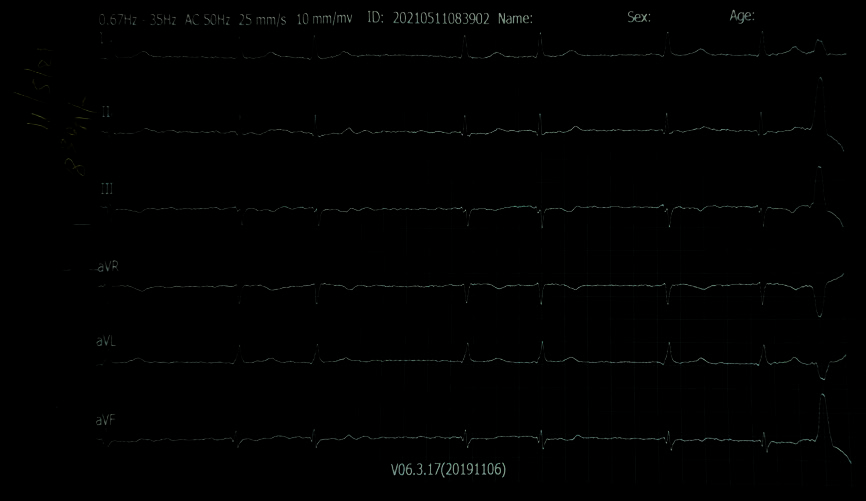
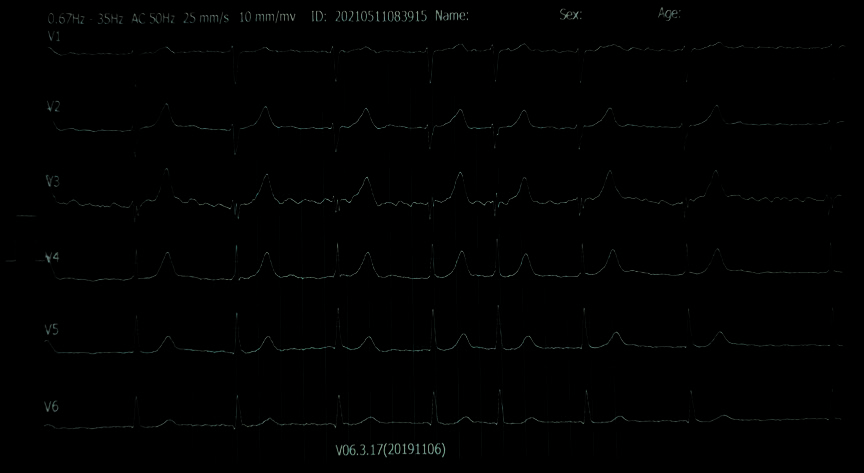
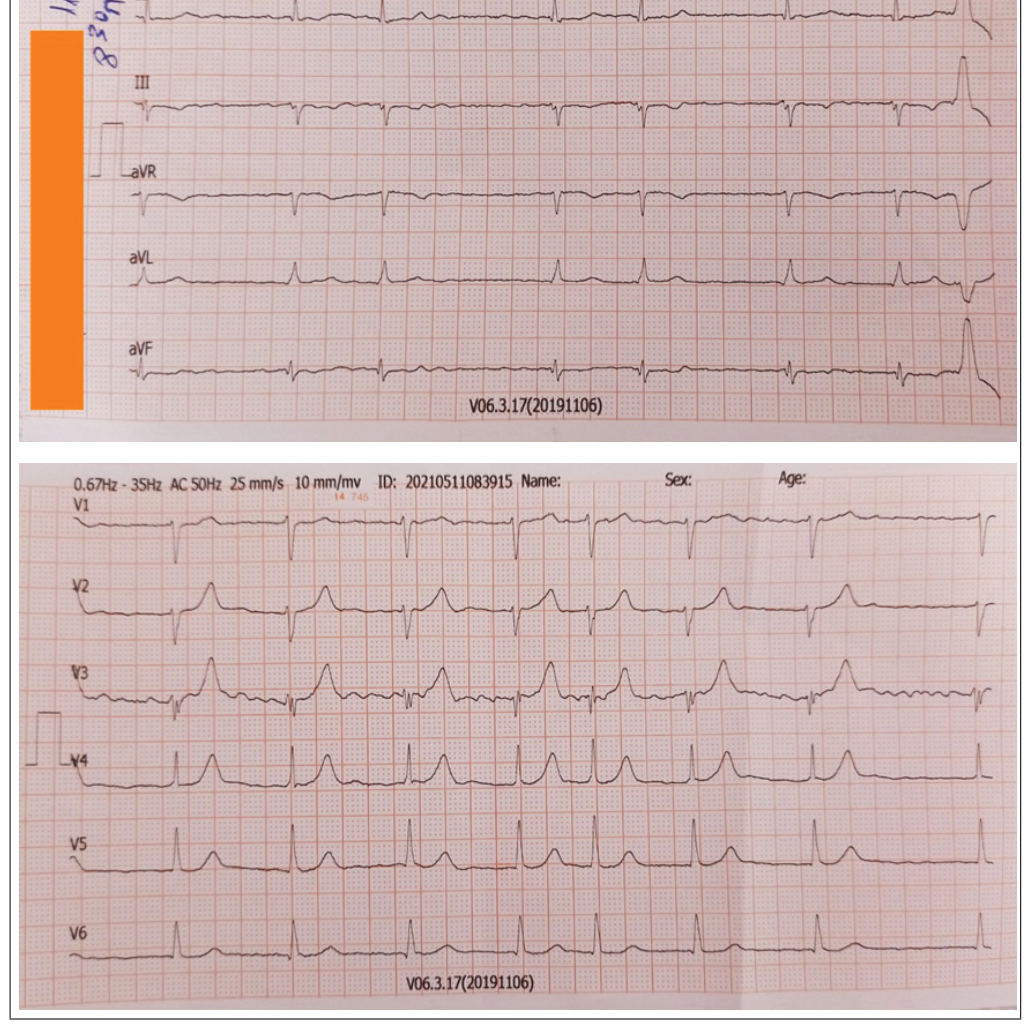
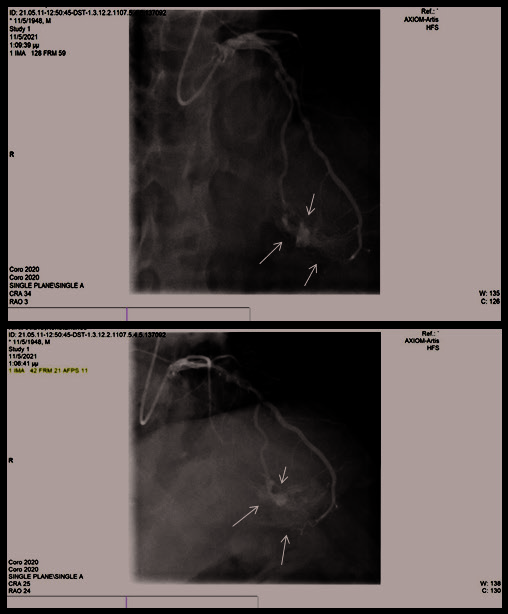
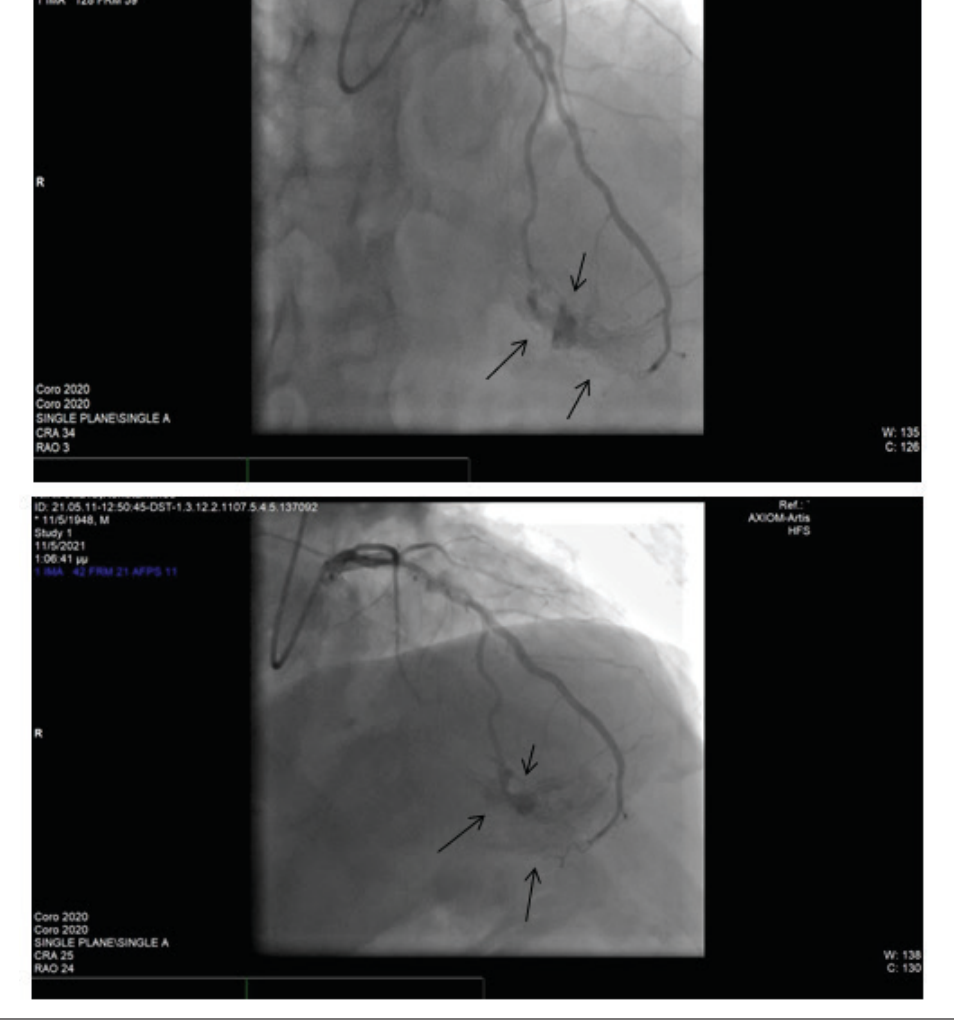
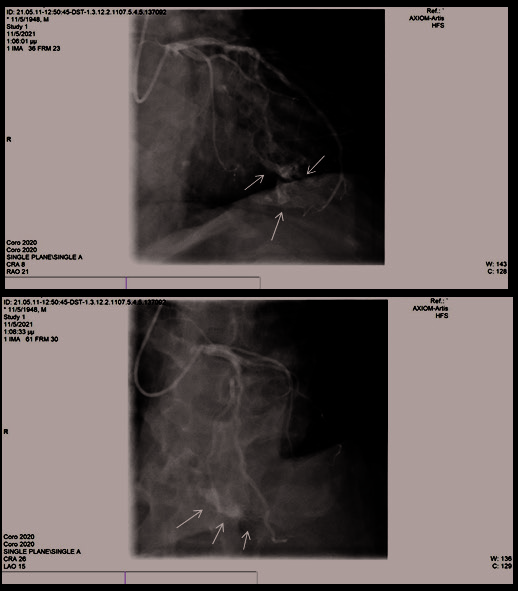
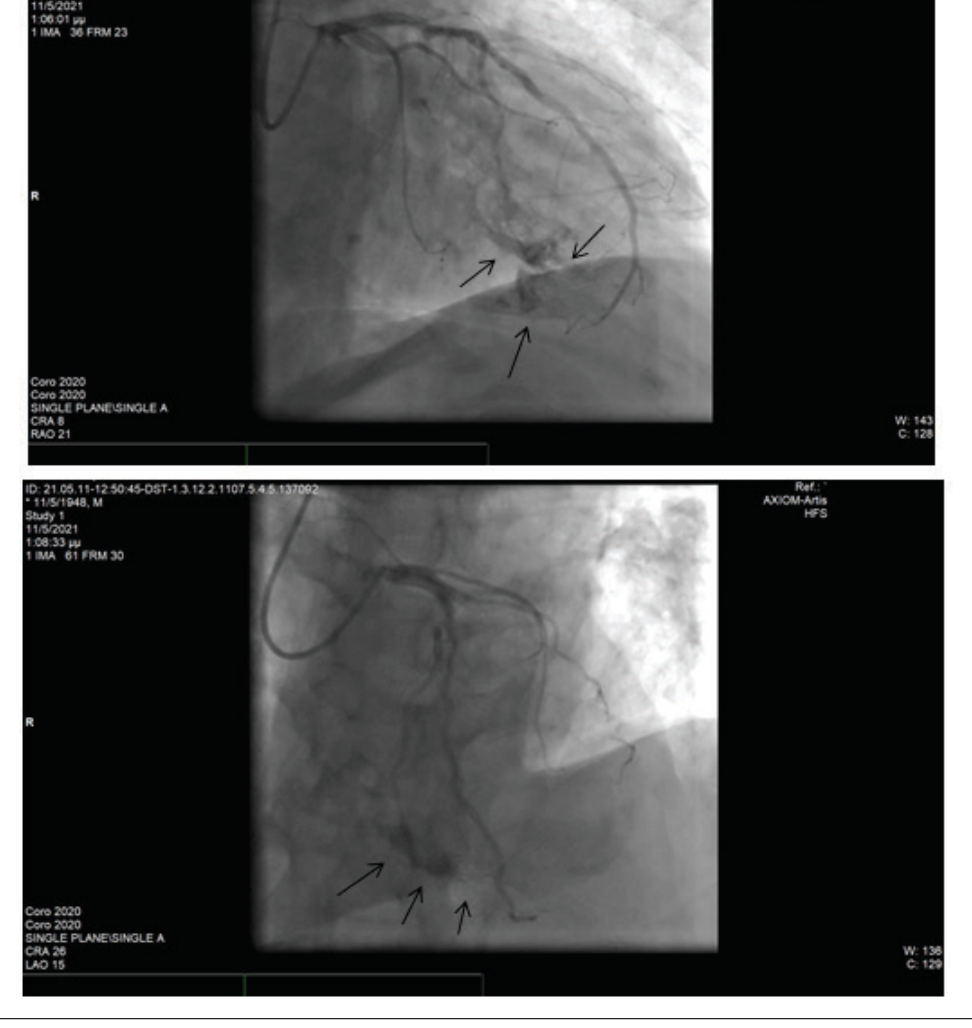
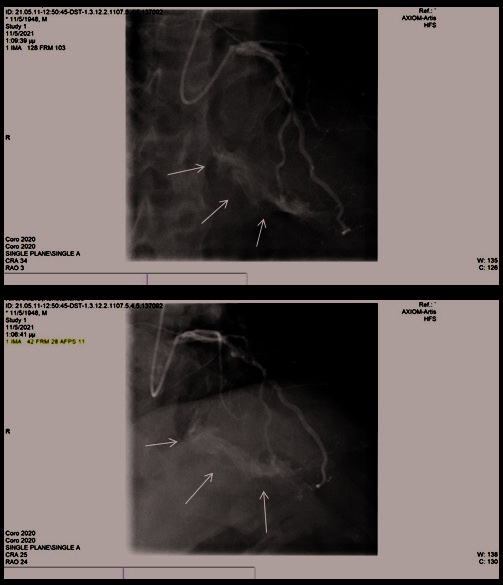
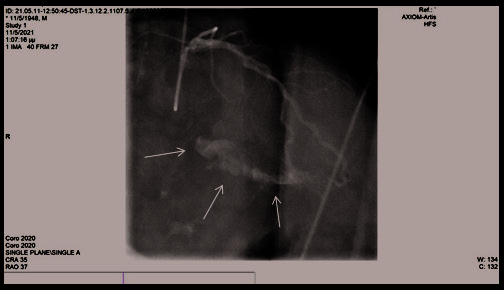
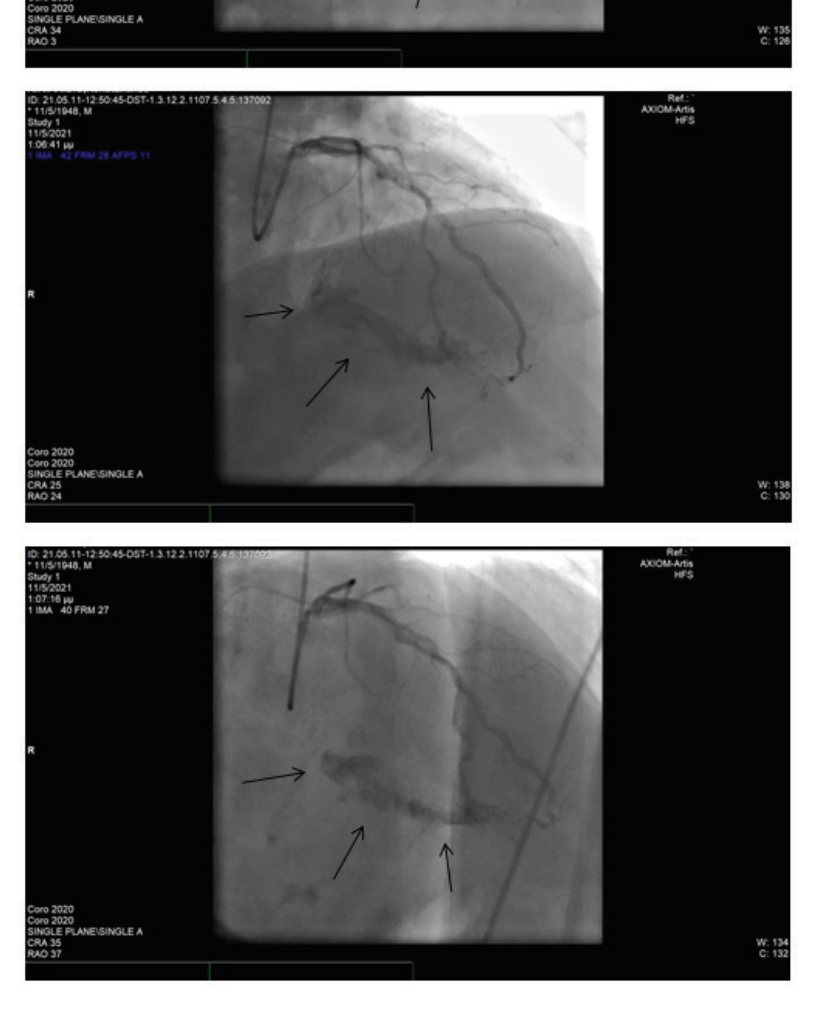
A 70-yearold male patient was referred to our hospital by an external cardiologist in order to be investigated for suspected coronary obstructive disease by coronary angiography.The patient was a smoker (approximately half a pack per day), with a medical past history of percutaneous coronary intervention in a left anterior descending artery (LAD) approximately 16 years ago (in 2005), permanent atrial fibrillation (pAf) on rate control & primary prevention for thromboembolic event strategy, hypertension and dyslipidemia. His medical treatment was optimal until recently when an onset of exertional dyspnea in mild effort appeared during the last period.A performed transthoracic echocardiography before his admission to our hospital revealed a left ventricular ejection fraction of approximately 45%, with a predominantly anterior wall hypokinesia. On admission, an electrocardiogram confirmed the patient’s medical past history of pAfib, showing at the same time a controlled heart rate (~70 bpm) with nonspecific repolarization disorders (Fig. 1). Blood tests performed were generally unremarkable.Finally, coronary angiography was performed uncomplicated and surprisingly set the diagnosis of one of the rarest types of a CCF, the communication being between the first diagonal coronary artery (D1) and the left ventricle (Figs. 2 and 3). The interventional study also revealed noncritical stenosis on D1’s ostial site and right coronary artery proximal site, while the stent in LAD was without stenosis. Upon this finding the patient was finally referred for surgery.
Discussion
An anomalous coronary connection is also that of a coronary artery fistula, with the site of origin and termination describing the type of fistula. They are distinguished in the socalled CCF when the abnormal communications are between coronary arteries and any cardiac chamber, while when any part of systemic or pulmonary vasculature is the site of drainage they are referred to as coronary arteriovenous malformations [1,3].
CCF may be a congenital or acquired aberrant communication between a coronary artery and any cardiac chamber. It may have a direct communication with the cardiac chamber being classified as arterioluminal or as arteriosinusoidal when a sinusoidal network interferes [4]. Congenital than acquired are more common and not gender specific [5].They represent 0.20% to 0.40% of congenital anomalies of the heart [4] with an incidence of
0.002% in the general population [5], with the diagnosis set in 0.08% to 0.30% of unselected coronary angiographies [5].A CCF arising from the left coronary system has an incidence of up to 50%–60% [4]. As far as the site of termination, the commonest sites of drainage are lowpressure structures, such as right chambers [6]. A leftsided cardiac chamber CCF is rare and particularly the left ventriclerelated drainage has an incidence as low as 1%–2% of all cases [4,6], while in this case, a fistula originating from the left coronary system is rarer compared to the right coronary system.Usually, patients are asymptomatic and a coronary angiography during investigation for coronary obstructive disease often sets the diagnosis incidentally [4,7]. In our case patient was oligosymptomatic, having the recent onset of exertional dyspnea in mild effort. The above symptom agrees with previous studies where patients with coronary fistulas draining into the left ventricle may present
symptoms resulting a diastolic volume overload and systolic ventricular dysfunction [2,4,7,8].Commonly, fistulas are hemodynamically insignificant and for this reason clinically silent. Not so often, symptomatic coronary fistulas could arise a common list of complications. A coronary “steal phenomenon” with a “supply and demand” imbalance leads to myocardial ischemia and symptoms with angina. High flowrelated fistulas may be associated with volume overload or ventricular dysfunction and may lead to symptoms of cardiac failure. Thrombosis and embolism may occur as well, while a possible fistula’s rupture may lead to hemopericardium and cardiac tamponade. Other complications may be arrhythmias, or infective endocarditis and endarteritis [1].
Μanagement of fistula includes surgical repair, catheter closure, or medical treatment. Surgical management is reserved for those patients who are symptomatic or other secondary complications are developed [7]. The features of a candidate for surgical treatment implicate a single, large fistula, with highflowrelated complications, multiple communications, very tortuous pathways, multiple terminations, or significant aneurysmal formation. Usually, in such cases, the patient is symptomatic, either by describing angina or reduced functional capacity or even manifesting overt clinical signs and symptoms of congestive cardiac failure. The need for simultaneous distal bypass reinforces the decision to follow a surgical strategy [6,9]. Large fistulas regardless of symptoms with small to moderate size
with evidence of myocardial ischemia, arrhythmia, ventricular dysfunction, ventricular enlargement, or endarteritis, should be treated surgically [10]. Also, closure of the fistula is highly recommended in cases that arise from the proximal segment of a coronary vessel as the probability of rupture is high [6,9]. Regarding transcatheter devices available for use in fistula closure includes detachable coils,
detachable balloons, covered stents, vascular plugs, umbrella devices, and vascular occlusion devices [7,11]. Medical treatment, facing the “supply and demand” imbalance due to the coronary “steal phenomenon”, reduces myocardial ischemia and has an antiaginal effect [6,12,13], while antiplatelet therapy is highly recommended as well [6,9]. Medical measures preventing bacterial endocarditis are highly recommended in all patients with coronary fistula [6,9,13].
Conclusion
The present case reconfirms the value the cardiac catheterization in cases with overlapped clinical pictures requiring challenging diagnosis. Coronary angiography, amongst other indications, is the gold standard choice for defining the pattern of structure and flow in cases of coronary artery anomalies, including CCFs. As for the management of CCFs, conservatively are treated asymptomatic patients with small fistulas, while invasive management is reserved for patients with both, shuntrelated significant hemodynamic burden or/and symptoms due to myocardial ischemia, congestive heart failure, or other fistularelated complications.
References1. Ali M, Kassem KM, Osei K, Effat M. Coronary artery fistulae. J Thromb Thrombolysis 2019 Aug; 48(2):345–51.2. Sağlam H, Koçoğullari CU, Kaya E, Emmiler M. Congenital coronary artery fistula as a cause of angina pectoris. Turk Kardiyol Dern Ars 2008; 36(8):552–4.3. Sagar D, Hernandez A, Heimowitz T. Coronary arteryleft ventricle fistula: a case report of a rare connection error! Cureus 2015 Apr 23; 7(4):e266.
4. Boyle S, Jesuthasan LSB, Jenkins C, Challa P, Ranjan S, Dahiya A. Coronarycameral fistula. Circ Cardiovasc Imaging 2019 May; 12(5):e008691.5. Upadhyay R, Gargava A, Prabhu V, Sarkar M, Ramteke JH. Coronary cameral fistula and its complications: a case report. Ann Card Anaesth 2020 Oct-Dec; 23(4):496–8.6. Challoumas D, Pericleous A, Dimitrakaki IA, Danelatos C, Dimitrakakis G. Coronary arteriovenous fistulae: a review. Int J Angiol 2014 Mar; 23(1):1–10.7. Raju MG, Goyal SK, Punnam SR, Shah DO, Smith GF, Abela GS. Coronary artery fistula: a case series with review of the literature. J Cardiol 2009; 53(3):467–72.8. Minhas AM, Ul Haq E, Awan AA, Khan AA, Qureshi G, Balakrishna P. Coronarycameral fistula connecting the left anterior descending artery and the first obtuse marginal artery to the left ventricle: a rare finding. Case Rep Cardiol 2017; 2017:8071281.9. Latson LA. Coronary artery fistulas: how to manage them. Catheter Cardiovasc Interv 2007; 70(1):110–6.10. Stout KK, Daniels CJ, Aboulhosn JA, Bozkurt B, Broberg CS, Colman JM, et al. 2018 AHA/ACC guideline for the management of adults with congenital heart disease: a report of the American College of Cardiology/American Heart Association Task Force on Clinical Practice Guidelines. J Am Coll Cardiol 2019; 73(12):e81–192.11. Zhang ZG, Xu XD, Bai Y, Zhang XL, Tan HW, Zhu YF, et al. Transcatheter closure of medium and large congenital coronary artery fistula using wiremaintaining technique. J Cardiol 2015; 66:509–13.12. Bobos D, Chatzis AC, Giannopoulos NM, Tsoutsinos A, Antoniadis A, Cokkinos D, et al. Successful surgical repair of a giant arteriovenous fistula of the coronary arteries. J Card Surg 2006; 21(3):269–70.13. Said S A, Lam J, van der Werf T. Solitary coronary artery fistulas: a congenital anomaly in children and adults. A contemporary review. Congenit Heart Dis 2006; 1(3):63–76.
| How to Cite this Article |
| Pubmed Style Kasmeridis C, Papadopoulos A, Sdogkos E, Vogiatzis I. Coronary-Cameral Fistula – An unexpected finding surprising the cath-lab team. Case Rep Ser Med. 2024; 1(1): 11-16. doi:10.5455/CRSM.20240930075848 Web Style Kasmeridis C, Papadopoulos A, Sdogkos E, Vogiatzis I. Coronary-Cameral Fistula – An unexpected finding surprising the cath-lab team. https://www.wisdomgale.com/crsm/?mno=222532 [Access: June 27, 2026]. doi:10.5455/CRSM.20240930075848 AMA (American Medical Association) Style Kasmeridis C, Papadopoulos A, Sdogkos E, Vogiatzis I. Coronary-Cameral Fistula – An unexpected finding surprising the cath-lab team. Case Rep Ser Med. 2024; 1(1): 11-16. doi:10.5455/CRSM.20240930075848 Vancouver/ICMJE Style Kasmeridis C, Papadopoulos A, Sdogkos E, Vogiatzis I. Coronary-Cameral Fistula – An unexpected finding surprising the cath-lab team. Case Rep Ser Med. (2024), [cited June 27, 2026]; 1(1): 11-16. doi:10.5455/CRSM.20240930075848 Harvard Style Kasmeridis, C., Papadopoulos, . A., Sdogkos, . E. & Vogiatzis, . I. (2024) Coronary-Cameral Fistula – An unexpected finding surprising the cath-lab team. Case Rep Ser Med, 1 (1), 11-16. doi:10.5455/CRSM.20240930075848 Turabian Style Kasmeridis, Charalambos, Antonios Papadopoulos, Evangelos Sdogkos, and Ioannis Vogiatzis. 2024. Coronary-Cameral Fistula – An unexpected finding surprising the cath-lab team. Case Reports and Series in Medicine, 1 (1), 11-16. doi:10.5455/CRSM.20240930075848 Chicago Style Kasmeridis, Charalambos, Antonios Papadopoulos, Evangelos Sdogkos, and Ioannis Vogiatzis. "Coronary-Cameral Fistula – An unexpected finding surprising the cath-lab team." Case Reports and Series in Medicine 1 (2024), 11-16. doi:10.5455/CRSM.20240930075848 MLA (The Modern Language Association) Style Kasmeridis, Charalambos, Antonios Papadopoulos, Evangelos Sdogkos, and Ioannis Vogiatzis. "Coronary-Cameral Fistula – An unexpected finding surprising the cath-lab team." Case Reports and Series in Medicine 1.1 (2024), 11-16. Print. doi:10.5455/CRSM.20240930075848 APA (American Psychological Association) Style Kasmeridis, C., Papadopoulos, . A., Sdogkos, . E. & Vogiatzis, . I. (2024) Coronary-Cameral Fistula – An unexpected finding surprising the cath-lab team. Case Reports and Series in Medicine, 1 (1), 11-16. doi:10.5455/CRSM.20240930075848 |