

| Case Report Online Published: 18 Dec 2024 | ||||||||||||
Case Rep Ser Med. 2024; 1(3): 48-50 A rare case; Cardiovocal syndrome due to aortic arch aneurysm (Ortner syndrome) Aşkın Pekbay, Uğurcan Balyemez, Özlem Balcıoğlu, Barçın Özcem, Mustafa Parıldar, Aşkın Ali Korkmaz.
| ||||||||||||



INTRODUCTION
Ortner syndrome (Cardiovocal syndrome) is characterized by progressive hoarseness caused by compression of the left recurrent laryngeal nerve (LRLN) by abnormal cardiovascular and mediastinal structures [1].
Aortic aneurysms may be present with many
important and warning symptoms considering their localization. One of them, hoarseness, is seen when the recurrent laryngeal nerve is affected.
Especially when the course of the left recurrent laryngeal nerve in the body is taken into consideration, it should be remembered that it may be associated with pathologies of cardiovascular origin. In the present case, the history of hoarseness was a valuable clue [2].
In recent years, with the rapid advancement of endovascular therapy, thoracic endovascular aortic repair (TEVAR) has become a frequently used modality to treat aortic arch disease. Appropriate intervention for an early diagnosed aortic aneurysm may be lifesaving.
CASE PRESENTATION
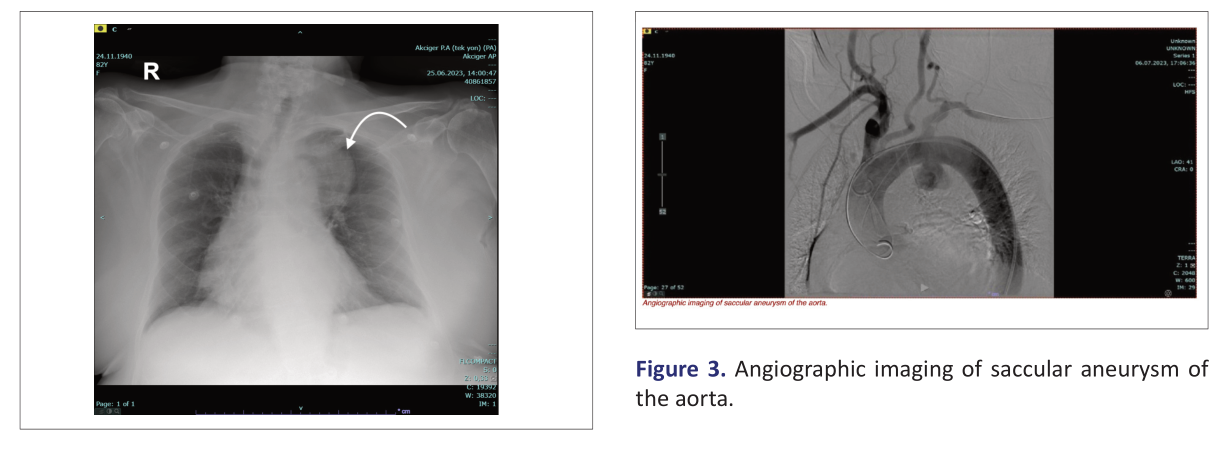
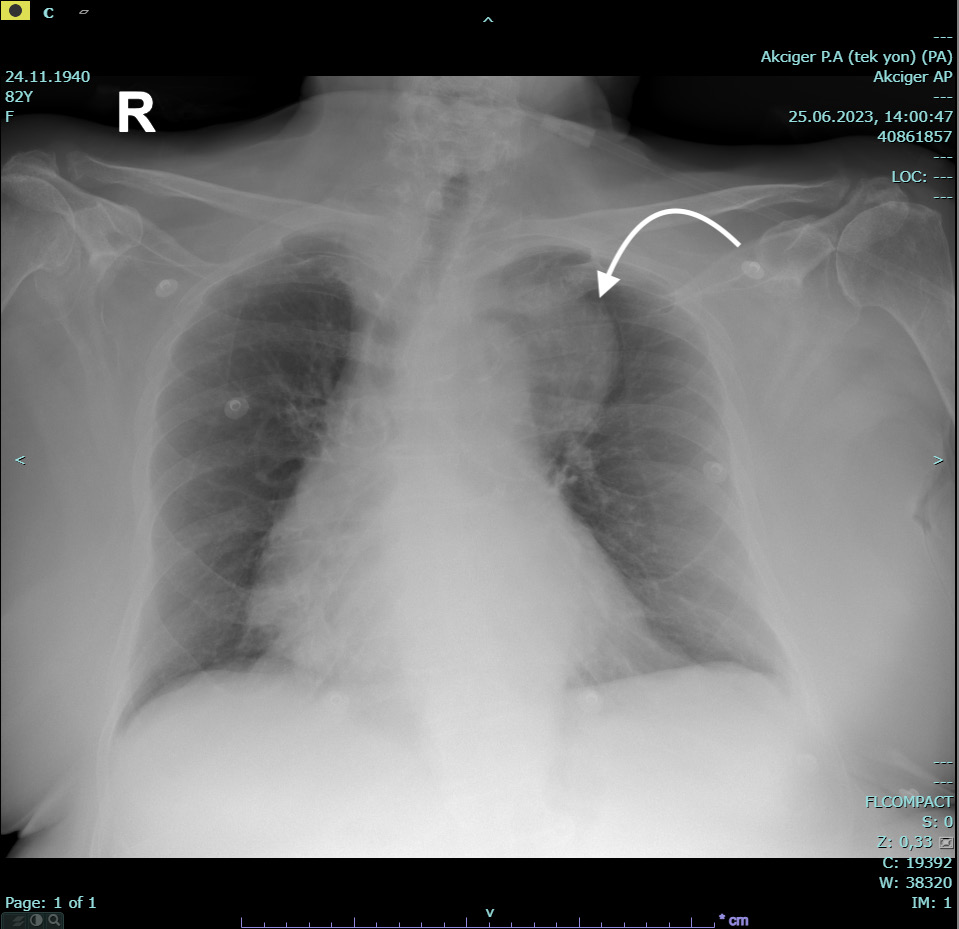
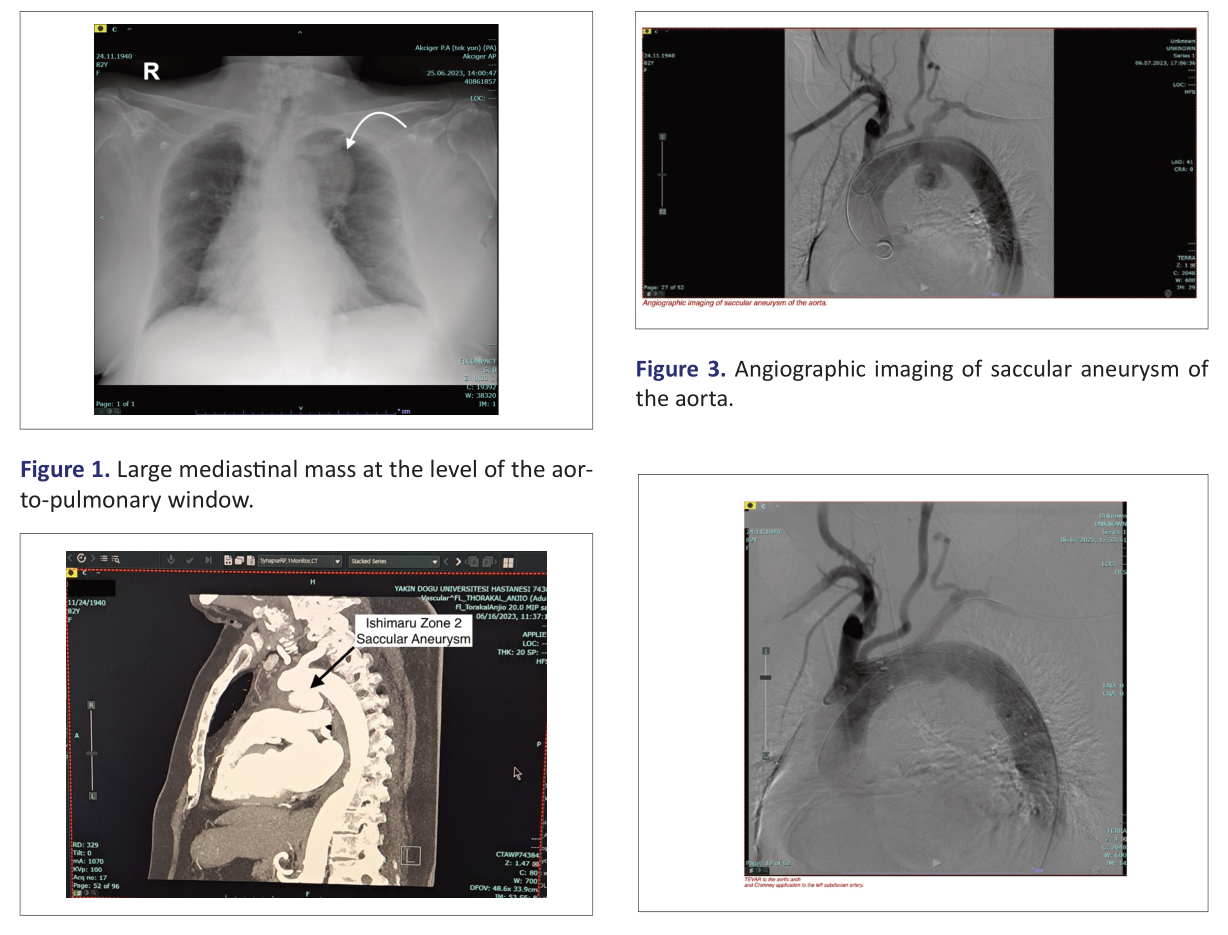
An 82-year-old morbidly obese (BMI: 40.79) woman with congestive heart failure, chronic obstructive pulmonary disease, and diabetes mellitus was admitted to our clinic with complaints of respiratory distress and progressive hoarseness that started two months ago. Routine chest radiography revealed there is a large mediastinal mass at the level of the aorto-pulmonary window (arrow).
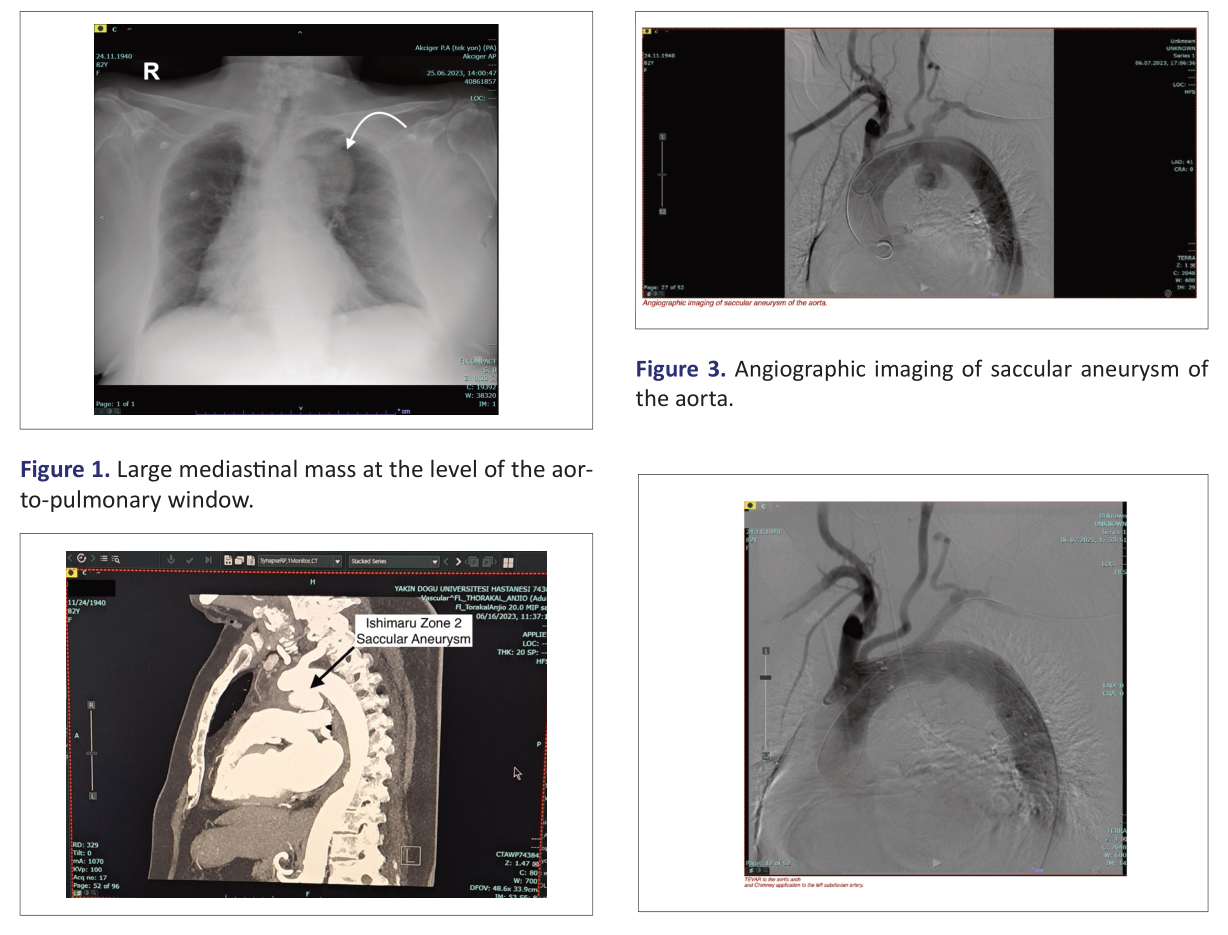
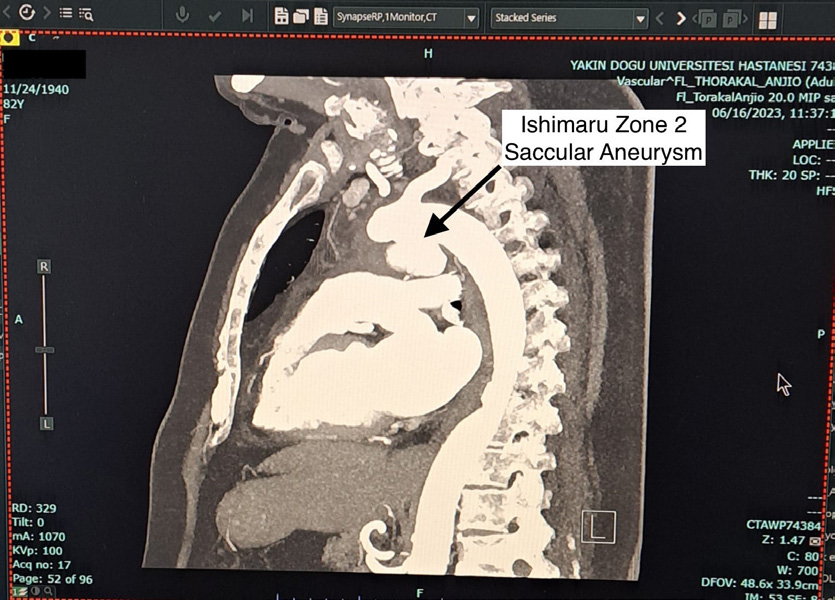
Thoracic tomography revealed a saccular aneurysm in Ishimaru’s zone 2 localization (Figure 2).
Endovascular intervention was planned due to
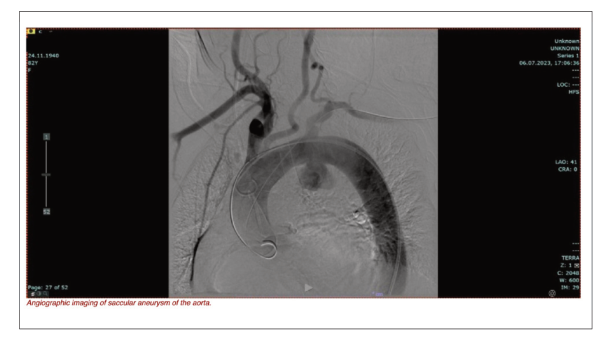
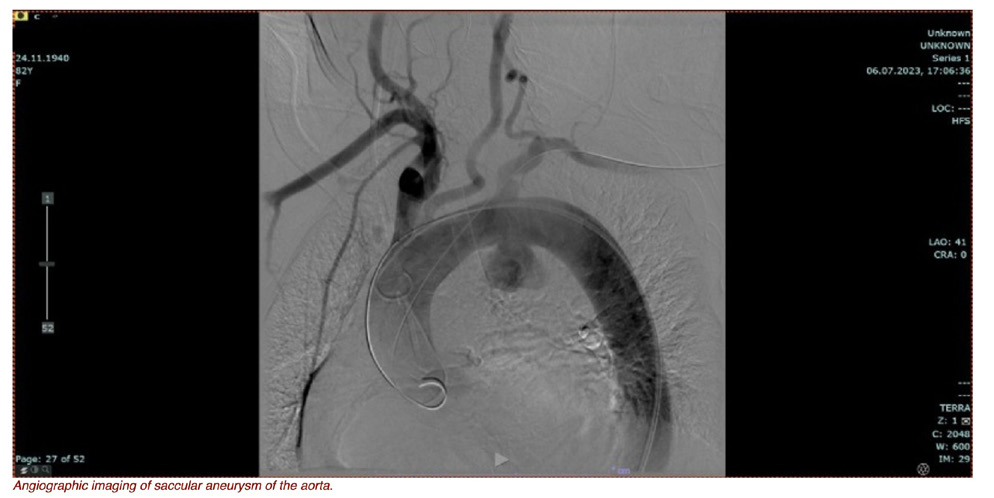
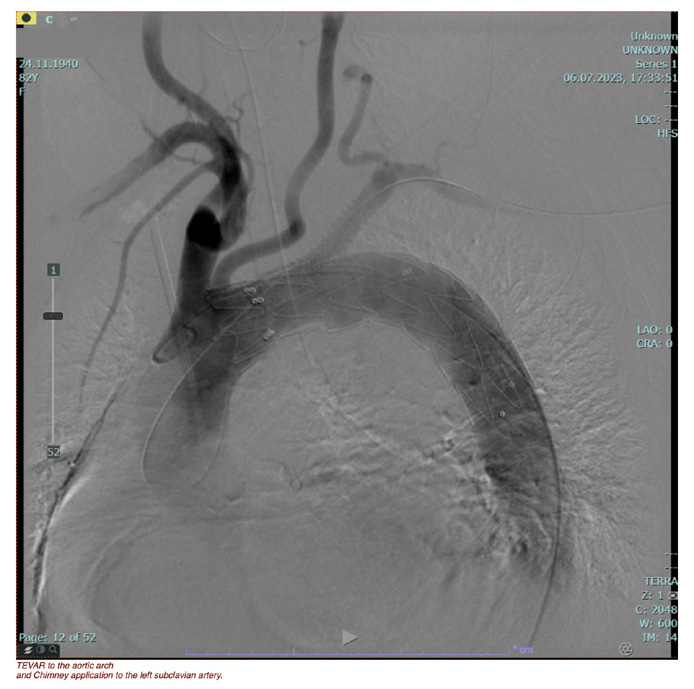
advanced age and comorbidities. TEVAR with right femoral artery access and left subclavian artery chimney was performed under general anesthesia (Figures 3 and 4).
The patient had no additional problems in postoperative follow-up and was discharged uneventfully on the fourth day after the procedure. At the first month follow-up, there was a clinically significant decrease in hoarseness.
DISCUSSION
Ortner syndrome, also known as Cardiovocal syndrome, is a rare medical condition in which LRLN compression occurs due to cardiovascular pathology, usually involving an enlarged heart or aorta. It was first reported by Nobert Ortner, in 1897, in three patients with hoarseness and mitral stenosis due to LRLN paralysis. This compression of the LRLN can lead to hoarseness and even vocal cord paralysis [1].
The LRLN is more vulnerable to compression
and injury than the right recurrent laryngeal nerve due to its close proximity to the major mediastinal vessels, trachea, esophagus, and lung apex and its long and tortuous course. Loughran et al., in a study of 77 patients, the most common cause of unilateral recurrent laryngeal nerve palsy was found to be lung cancer (43%)[2]. There is no citation mismatch with my side!
The treatment of choice for aortic arch aneurysms may be open surgery or an interventional procedure. Generally, open aneurysmectomy, the removal of infectious tissues along with debridement of adjacent vessels is the traditional treatment of choice for mycotic aneurysms. In situ, tube graft placement or extra-anatomic bypass grafting have less promising long-term results due to the risk of infection [3].
In recent years, with the rapid advancement of endovascular therapy, TEVAR has become a frequently used modality to treat aortic arch disease. Techniques used to preserve the supra-aortic branches include hybrid surgery, chimney graft, graft fenestration, and branch stenting; however, due to their limitations, these techniques are only used in patients who meet strict anatomical criteria.
The Chimney technique is used to prevent the
closure of important aortic branches during aortic endovascular repair. The Chimney technique is most commonly used for reconstruction of the left subclavian artery.
Endoleak and graft compression are the main
undesirable complications of the chimney technique [4].
With increasing proficiency in endovascular
procedures, total endovascular repair of the aortic arch using advanced generation branched or fenestrated endograft or with the chimney technique
has been attempted in some centers with technical success and low perioperative morbidity and mortality; however, randomized multi-center trials and long-term efficacy and durability data are still lacking [5].
CONCLUSION
In patients presenting with progressive hoarseness, mediastinal large vessel aneurysms should be remembered and the most appropriate approach should be determined according to the patient’s condition.
Considering the comorbidity, endovascular intervention for saccular aneurysm was preferred in our patient, providing a significant advantage in favor of the patient. We think that the exclusion of the aneurysmatic segment by endovascular intervention should be kept in mind as a good alternative to conventional surgery in patients in whom conventional surgery is high risk.
AUTHORS’ CONTRIBUTIONS All authors contributed to the acquisition of data for the work. All authors contributed to drafting of the work. All authors contributed in final approval of the version to be published. All authors agree to be accountable for all aspects of the work in ensuring that questions related to the accuracy or integrity of any part of the work are appropriately investigated and resolved.
CONFLICT OF INTEREST
The authors declare that they have no conflict of interest.
REFERENCES1. Semionov A, Kosiuk J. Ortner syndrome secondary to aortic aneurysm. Radiol Case Rep 2017;12(1): 29–30.
2. Madhuraj S, Gangadharan H, Manju R, Prakash A, Arasan SS, Krishnadas S, Kumar S. A rare cause of ortner’s syndrome and a case-based review of literature. Indian J Otolaryngol Head Neck Surg 2022;74(Suppl 3):5338–41.
3. Alpagut U, Ugurlucan M, Kafali E, Surmen B, Sayin OA, Guven K, et al. Endoluminal stenting of mycotic saccular aneurysm at the aortic arch. Tex Heart Inst J 2006;33(3):371.
4. Zhang J, Liu X, Tian M, Chen H, Wang J, Ji M, et al. Endovascular aortic repairs combined with loopingchimney technique for repairing aortic arch lesions and reconstructing left common carotid artery. J Thorac Dis 2020;12(5):2270–9.
5. Sethi S, Parekh U. Aortic Arch Aneurysm. [Updated 2023 Jul 24]. In: StatPearls [Internet]. Treasure Island (FL): StatPearls Publishing; 2024 Jan-. Available from: https://www.ncbi.nlm.nih.gov/ books/NBK563170/.
| How to Cite this Article |
| Pubmed Style Pekbay A, Balyemez U, Balcıoğlu O, Ozcem B, Parıldar M, Korkmaz AA. A rare case; Cardiovocal syndrome due to aortic arch aneurysm (Ortner syndrome). Case Rep Ser Med. 2024; 1(3): 48-50. doi:10.5455/CRSM.20241011085815 Web Style Pekbay A, Balyemez U, Balcıoğlu O, Ozcem B, Parıldar M, Korkmaz AA. A rare case; Cardiovocal syndrome due to aortic arch aneurysm (Ortner syndrome). https://www.wisdomgale.com/crsm/?mno=224240 [Access: June 27, 2026]. doi:10.5455/CRSM.20241011085815 AMA (American Medical Association) Style Pekbay A, Balyemez U, Balcıoğlu O, Ozcem B, Parıldar M, Korkmaz AA. A rare case; Cardiovocal syndrome due to aortic arch aneurysm (Ortner syndrome). Case Rep Ser Med. 2024; 1(3): 48-50. doi:10.5455/CRSM.20241011085815 Vancouver/ICMJE Style Pekbay A, Balyemez U, Balcıoğlu O, Ozcem B, Parıldar M, Korkmaz AA. A rare case; Cardiovocal syndrome due to aortic arch aneurysm (Ortner syndrome). Case Rep Ser Med. (2024), [cited June 27, 2026]; 1(3): 48-50. doi:10.5455/CRSM.20241011085815 Harvard Style Pekbay, A., Balyemez, . U., Balcıoğlu, . O., Ozcem, . B., Parıldar, . M. & Korkmaz, . A. A. (2024) A rare case; Cardiovocal syndrome due to aortic arch aneurysm (Ortner syndrome). Case Rep Ser Med, 1 (3), 48-50. doi:10.5455/CRSM.20241011085815 Turabian Style Pekbay, Aşkın, Uğurcan Balyemez, Ozlem Balcıoğlu, Barcın Ozcem, Mustafa Parıldar, and Aşkın Ali Korkmaz. 2024. A rare case; Cardiovocal syndrome due to aortic arch aneurysm (Ortner syndrome). Case Reports and Series in Medicine, 1 (3), 48-50. doi:10.5455/CRSM.20241011085815 Chicago Style Pekbay, Aşkın, Uğurcan Balyemez, Ozlem Balcıoğlu, Barcın Ozcem, Mustafa Parıldar, and Aşkın Ali Korkmaz. "A rare case; Cardiovocal syndrome due to aortic arch aneurysm (Ortner syndrome)." Case Reports and Series in Medicine 1 (2024), 48-50. doi:10.5455/CRSM.20241011085815 MLA (The Modern Language Association) Style Pekbay, Aşkın, Uğurcan Balyemez, Ozlem Balcıoğlu, Barcın Ozcem, Mustafa Parıldar, and Aşkın Ali Korkmaz. "A rare case; Cardiovocal syndrome due to aortic arch aneurysm (Ortner syndrome)." Case Reports and Series in Medicine 1.3 (2024), 48-50. Print. doi:10.5455/CRSM.20241011085815 APA (American Psychological Association) Style Pekbay, A., Balyemez, . U., Balcıoğlu, . O., Ozcem, . B., Parıldar, . M. & Korkmaz, . A. A. (2024) A rare case; Cardiovocal syndrome due to aortic arch aneurysm (Ortner syndrome). Case Reports and Series in Medicine, 1 (3), 48-50. doi:10.5455/CRSM.20241011085815 |